Silverleaves Labradoodles
  • Home
  • About
  • Our Dogs
    • Our Dogs
    • Retired Dogs
  • Puppies
    • Current Litter
    • Planned Litters
    • Mylah x Dobby Jan 26
    • Evie x Dobby Jan 26
    • Bob X Dobby May 25
    • Mylah x Milo Oct 24
    • Evie X Odie May 24
    • Mylah x Freddie Jan 24
    • Winnie x Aramis Oct 22
  • Guardian Programme
  • Resources
    • Health Testing/Guarantee
    • Desexing Contracts
    • Training Program
    • Feeding
    • Grooming
    • Socialization
  • FAQs
  • Contact
  • More
    • Home
    • About
    • Our Dogs
      • Our Dogs
      • Retired Dogs
    • Puppies
      • Current Litter
      • Planned Litters
      • Mylah x Dobby Jan 26
      • Evie x Dobby Jan 26
      • Bob X Dobby May 25
      • Mylah x Milo Oct 24
      • Evie X Odie May 24
      • Mylah x Freddie Jan 24
      • Winnie x Aramis Oct 22
    • Guardian Programme
    • Resources
      • Health Testing/Guarantee
      • Desexing Contracts
      • Training Program
      • Feeding
      • Grooming
      • Socialization
    • FAQs
    • Contact
Silverleaves Labradoodles
  • Home
  • About
  • Our Dogs
    • Our Dogs
    • Retired Dogs
  • Puppies
    • Current Litter
    • Planned Litters
    • Mylah x Dobby Jan 26
    • Evie x Dobby Jan 26
    • Bob X Dobby May 25
    • Mylah x Milo Oct 24
    • Evie X Odie May 24
    • Mylah x Freddie Jan 24
    • Winnie x Aramis Oct 22
  • Guardian Programme
  • Resources
    • Health Testing/Guarantee
    • Desexing Contracts
    • Training Program
    • Feeding
    • Grooming
    • Socialization
  • FAQs
  • Contact

Our Health Guarantee

The health and wellbeing of our puppies is our highest priority. We are committed to responsible breeding practices and carefully select breeding dogs that have undergone comprehensive health testing to ensure they meet the highest standards for temperament, structure, and genetic health.


To provide our families with peace of mind, all of our puppies come with a 3-year health guarantee against any testable inherited genetic health conditions. We believe that standing behind our breeding program is an essential part of producing healthy, well-adjusted puppies.


As a veterinarian and co-owner of our breeding program, Dr Chloe brings professional veterinary knowledge and expertise to every stage of our breeding decisions, from health screening and genetic testing through to puppy care and development. This unique combination of veterinary insight and ethical breeding practices allows us to make informed decisions that prioritise the long-term health of our dogs and their offspring.


While no breeder can guarantee a puppy will never experience illness or injury, we take every possible step to give our puppies the healthiest start in life and to support their families throughout their journey.


Hip Dysplasia

While we can screen for hip dysplasia in our breeding dogs and try and reduce the incidence in our puppies by breeding dogs with low scores, hip dysplasia is a multifactorial disease.


Environmental factors can affect the development of young growing hip joints. Factors include excessive jumping, slipping on floors and inappropriate exercise for the age of the puppy

THe Health Testing that we perform

Pennhip scoring

For hip scoring, we choose to evaluate our breeding dogs using PennHIP, a scientifically validated screening method that is widely regarded as one of the most accurate tools available for assessing the risk of hip dysplasia. PennHIP scoring is a technique used to measure and assess hip joint laxity. Studies have shown, breeders that consistently bred from PennHIP scores that were better than the breed average reduced the rates of osteoarthritis in their breed. The breed average distraction index (DI) for Labradoodles is 0.5. We only breed from dogs that have a lower score than the breed average, meaning they have less loose hips.


This technique requires 3 xrays views be taken while the dog is sedated.The three views are

  • Standard hip extended view
  • Compression view
  • Distraction view


Often the distraction view shows greater laxity (looseness) in the hip than the hip extended view. This is because the hip extended view often masks hip laxity due to the position the socket is stretched into. This is why both views are required to be assessed with PennHIP scoring. The compression view allows the radiologist to assess the fit of the femoral head (ball) into the acetabulum (socket).


Why do we choose to do Pennhip scoring over OFA/CHEDS?


Unlike traditional hip scoring systems such as OFA or CHEDS, which primarily assess existing arthritic changes and hip conformation, PennHIP measures the actual looseness (laxity) of the hip joint. Hip laxity has been shown to be the strongest predictor for the future development of hip dysplasia and osteoarthritis.
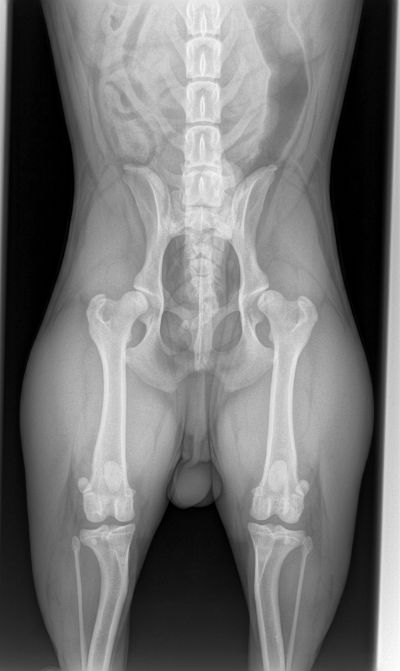
Compression view

Distraction view

Elbow Scoring

Elbow scoring is done at the same time as hip scoring. Xrays are taken of each elbow and sent off for assessment. The conformation of the elbow and any signs of osteoarthritis is assessed and then given a score. We will only breed from dogs with a score of 0 and 0 in each elbow. A score of 0 means the elbow has no conformational issues and no signs of osteoarthritis

DNA testing

We Use Orivet health testing to test for 31 diseases that can be hereditary in both the Labrador and Poodle breeds. All our breeding dogs will be determined clear of these diseases based on the results.

Some of the conditions we test for include:

  • PRA
  • Degenerative Myelopathy
  • Von Willebrand's disease
  • Ivermectin Sensitivity MDR1
  • Malignant Hyperthermia

Click here for the full list of hereditary conditions we test for.


Copyright © 2026 Silverleaves Labradoodles - All Rights Reserved.

Powered by

This website uses cookies.

We use cookies to analyze website traffic and optimize your website experience. By accepting our use of cookies, your data will be aggregated with all other user data.

Accept